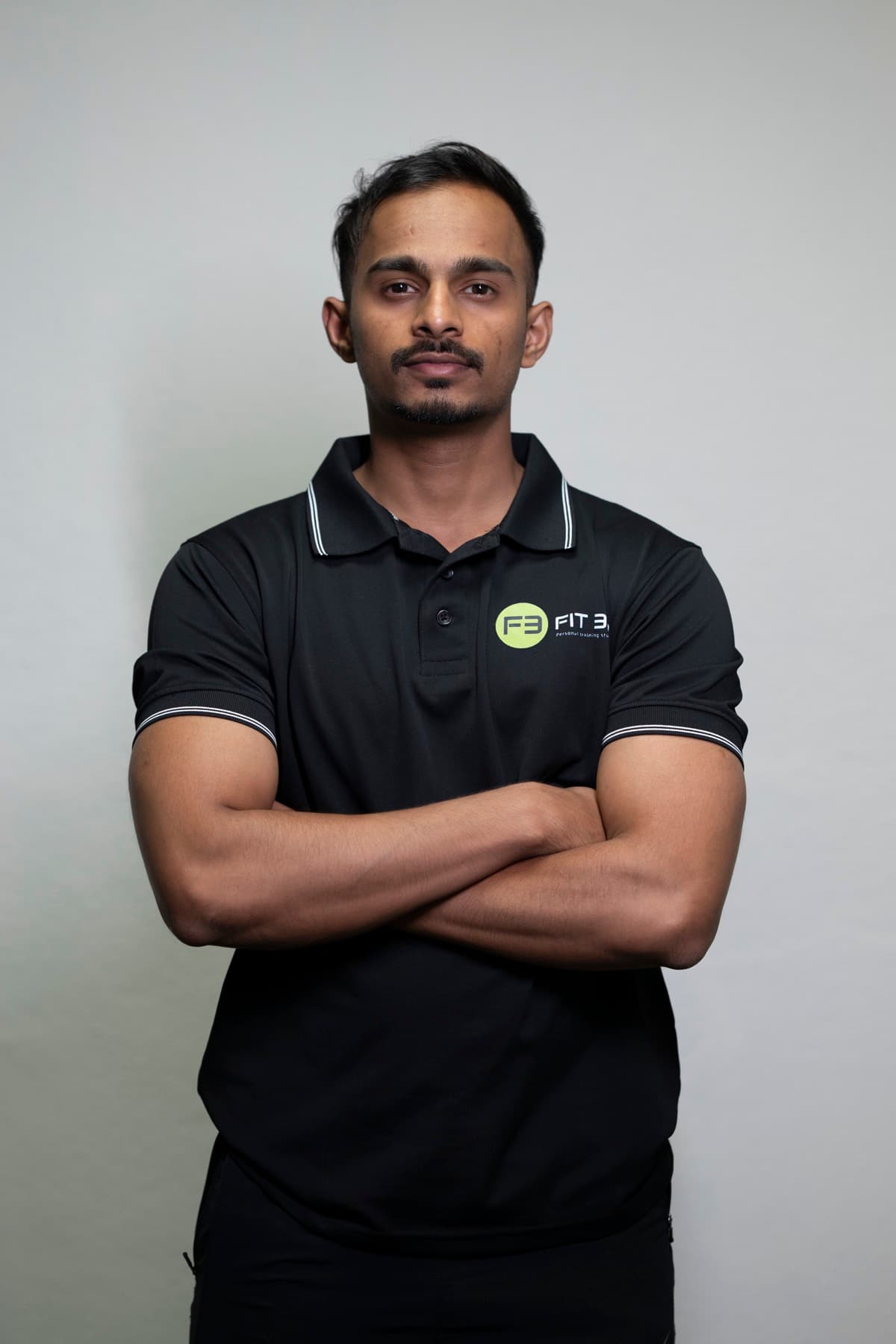
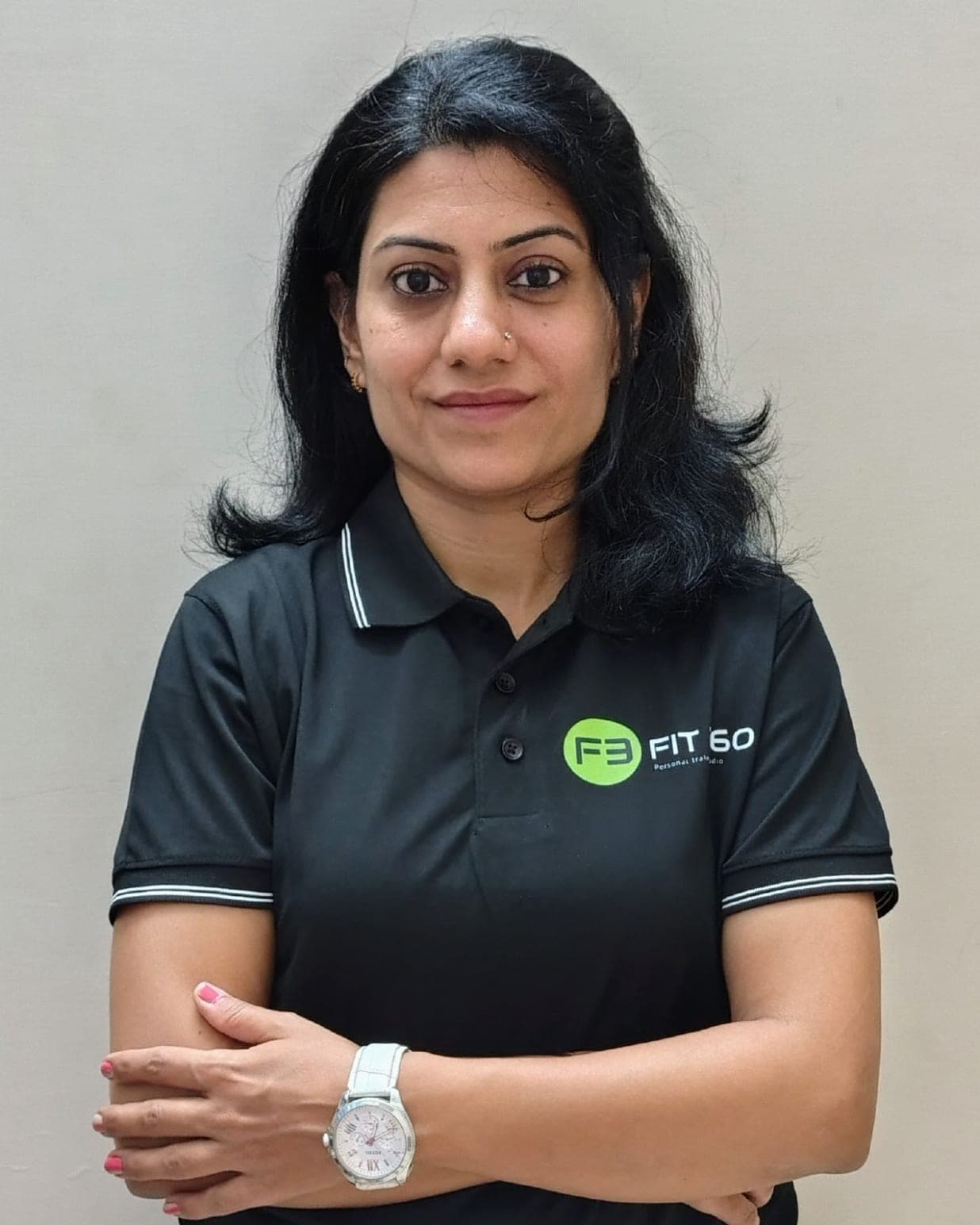
A supervised, doctor-coordinated back-pain and slip-disc training session at the FIT360 studio in Kharadi, Pune
Supervised · Doctor-coordinated · Pune

Back Pain & Slip-Disc Exercise Programme in Pune: Supervised, Doctor-Coordinated Training

A coached, progressive plan built around your spine — in a private Kharadi studio, or at home with the equipment delivered to your door.

  • ACE- & ACSM-certified coaching
  • Doctor-coordinated
  • Rated 4.9★ on Google
  • Kharadi, Pune

You know the exact moment it started to feel permanent. The desk. The commute. The evening you bent to pick up a bag and something in your lower back said no. Maybe a scan came back saying “disc bulge” or “L4–L5 herniation,” and now every movement carries a small question mark. You’ve been told to rest, handed painkillers, and warned off exercise — so you’ve been careful, and somehow the back has only got weaker and more fragile.

Here’s the part most people are never told: for the majority of low-back pain and slipped discs, staying still is the problem, not the cure. Backs are built to move, load, and get strong again. What they need isn’t bed rest or a random gym routine — it’s the right movement, in the right dose, supervised by someone watching your form and coordinating with your doctor. That is exactly what FIT360’s slip-disc exercise programme in Pune is built to deliver.

In short: a slip-disc and back-pain exercise programme is a graded, supervised training plan that reduces pain, rebuilds the strength and stability around your spine, and restores everyday function — coordinated with your doctor or physiotherapist. It does not replace medical care, and no exercise can “un-slip” a disc. What it can do is get you moving, stronger, and less afraid of your own back.

01 — The three dead ends

Why Gyms, Bed Rest, and Random Exercise Make Backs Worse

When your back hurts, you’re usually pushed toward one of three dead ends — and each one quietly makes a fragile spine more fragile.

Dead end 01

Bed rest and “just be careful.”

This was the standard advice for decades, and it’s now outdated. Lying low for more than a day or two lets the muscles that support your spine switch off and weaken, stiffness sets in, and the fear of movement grows. Both the NHS and the UK’s National Institute for Health and Care Excellence now recommend the opposite: for low back pain and sciatica, exercise and staying physically active are the recommended first-line self-management — not rest.

Dead end 02

Painkillers alone.

Medication can be a useful part of what your doctor prescribes, and sometimes it’s essential. But a tablet mutes the signal without changing the structure underneath. Lean on it as the whole plan and you get a back that feels quiet on the surface while the weakness that caused the pain never gets addressed.

Dead end 03

A regular gym or a random YouTube routine.

This is the most dangerous option of all. A crowded gym floor gives you machines and a generic plan written for a healthy spine, with nobody watching whether you’re loading your back correctly. A YouTube video or an app can’t see the moment your form breaks down under load — and with a disc issue, that single un-coached rep is exactly how people turn a manageable problem into a flare-up. The exercises aren’t the enemy. Doing them unsupervised, ungraded, and blind to your pain limits is.

02 — The honest comparison

Supervised Coaching vs a Gym vs Rest vs a YouTube Routine

Here’s the honest comparison. When you go looking for help with a slipped disc or chronic back pain, these are really the four paths in front of you — and they are not the same thing.

Someone watching your form under load
FIT360
Yes — one coach, one client, every rep
Gym + plan
Rarely; floor is shared
Rest + pills
N/A — no movement
YouTube / app
None — the screen can't see you
Load graded to your pain & stage
FIT360
Yes — progressed as you improve
Gym + plan
Generic sets and weights
Rest + pills
No load at all
YouTube / app
One-size-fits-all
Coordinated with your doctor/physio
FIT360
Yes — the medical↔fitness bridge
Gym + plan
Almost never
Rest + pills
Medical only, no reconditioning
YouTube / app
No
Rebuilds strength & spinal stability
FIT360
Core stability + progressive loading
Gym + plan
Hit or miss
Rest + pills
Muscles weaken further
YouTube / app
Unstructured
Plan adapts as your back changes
FIT360
Yes — continuously adjusted
Gym + plan
Static plan
Rest + pills
No plan
YouTube / app
No
Respects red flags & knows when to stop
FIT360
Yes — trained to refer you back
Gym + plan
Usually not
Rest + pills
N/A
YouTube / app
No
Privacy & pace (no crowd, no rush)
FIT360
The studio is yours
Gym + plan
Crowded, waiting for machines
Rest + pills
Home, but static
YouTube / app
Home, but unguided

Only one column gives you graded, supervised movement, coordinated with your doctor, from a coach who is watching every rep and knows when not to load you. For a spine you’re worried about, that supervision is the whole point.

03 — What a slip disc actually is

What A Slip Disc Actually Is

For the majority of low-back pain and slipped discs, staying still is the problem, not the cure. Here’s the picture, in plain terms — every label below is lifted straight from how we explain it.

  • the discs between the vertebrae
  • We rebuild core and spinal stability first
  • the muscles that support and offload the spine
  • A disc bulge is common
  • Backs are built to move, load, and get strong again
  • no exercise can ‘un-slip’ a disc

Fig. 01  — an abstraction, not your scan. We don’t diagnose backs; we design the exercise that fits the diagnosis you already have.

04 — How the programme works

Graded, Supervised, and Built Around Your Spine

The evidence here is genuinely encouraging, and it’s worth being precise about it. For chronic low back pain, a large Cochrane review found that exercise therapy reduces pain and functional limitation compared with no treatment or usual care. And for the specific job of stabilising a vulnerable spine, a separate Cochrane review found that motor-control and core-stability exercise improves pain and disability in chronic non-specific low back pain. Exercise, done properly, is not a risk to manage around — it’s the treatment. The catch is in the two words done properly. Here’s how we do it.

1

It starts with your diagnosis, not a workout

We require a medical diagnosis before you train — the MRI, the X-ray, or your doctor’s or physiotherapist’s assessment. We don’t diagnose backs; we design the exercise that fits the diagnosis you already have. Then Lucky assesses your movement, your strength, and your real pain limits, and builds from there.

2

Progressive, graded loading that respects your pain limits

The core principle is simple: start where your back is today, and add load slowly, only as your body earns it. We rebuild core and spinal stability first, then progressively strengthen the muscles that support and offload the spine. Nothing is rushed, nothing is loaded through sharp pain, and every session is dosed to leave you a little stronger — not flared up.

3

A plan that keeps adapting as your back changes

This is what a gym plan and an app can never do. Your programme is not a PDF you’re handed once. It’s continuously adjusted to where your spine is right now — a good week gets a little more load, a stiff or sore week gets dialled back, a flare-up gets a gentler path. As your strength returns and your pain settles, the plan shifts from early rehabilitation toward genuine strength and resilience. It keeps up with your body instead of ignoring it.

4

The optimised hour — form correction is the safety

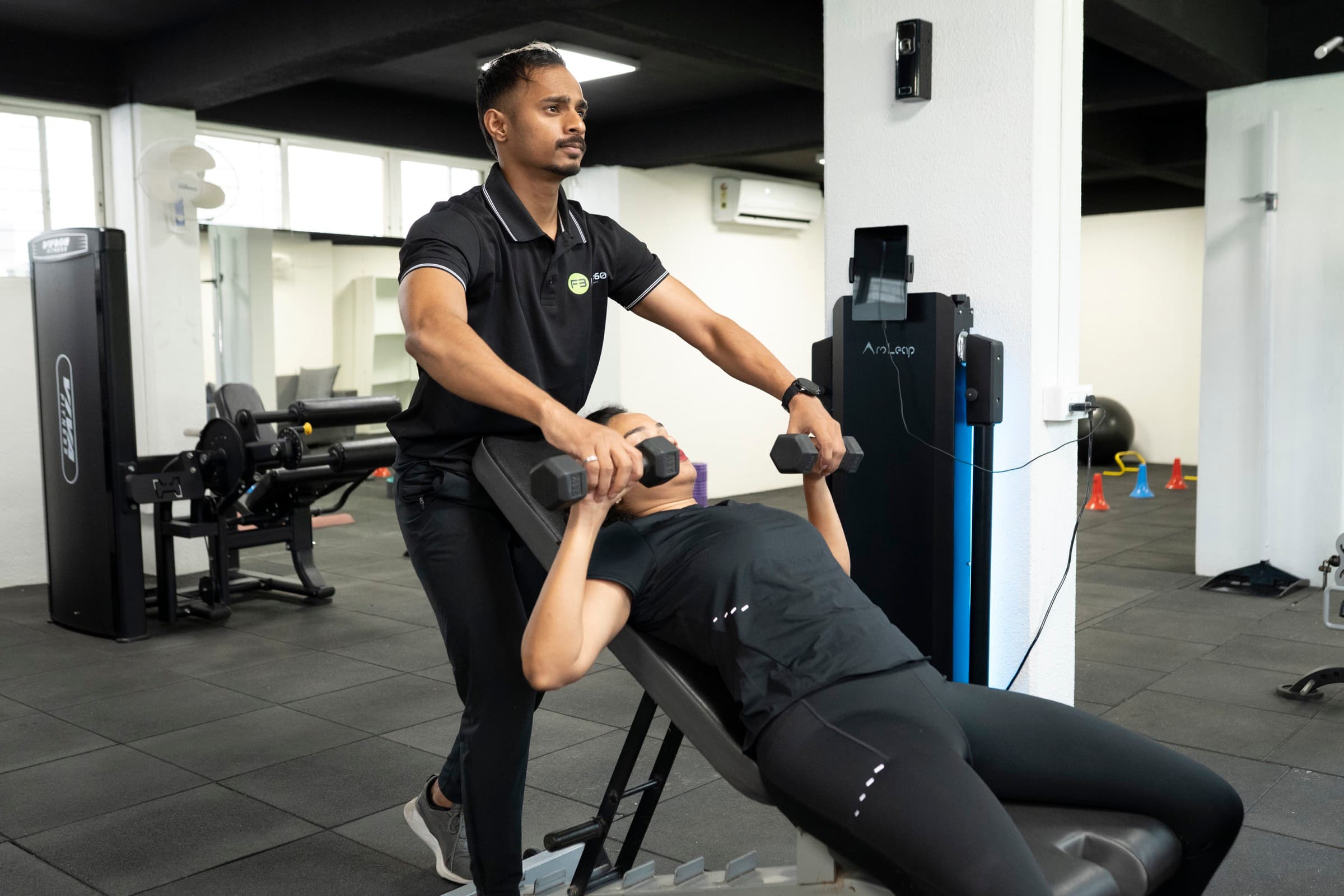
When you book your slot, the studio is yours. No crowd, no queue for a rack, nobody rushing you. That matters more for a back than for anything else: with one coach watching one client, your form is corrected on the rep, before a small mistake becomes a flare-up. The full hour is spent moving well under supervision — which is exactly the safeguard a shared gym floor or a phone screen can’t give you.

We won’t claim any single method is magic. You’ll see McKenzie exercises, core and motor-control work, and progressive strength training talked about online as if one of them is the answer. The honest position, and the one the evidence supports, is that supervised, graded, individualised exercise is what helps — not a single branded routine. Your plan borrows from all of it, matched to your diagnosis and your response.

05 — Nutrition & your spine

Because Every Extra Kilo Loads Your Spine

Nutrition coaching is included in every programme, and for a back it isn’t a side note. Excess body weight, especially around the middle, adds constant mechanical load to your lumbar spine and the discs between the vertebrae — so for many clients, sensible fat loss is one of the most direct ways to reduce day-to-day back strain. Our clinical dietitian, Ekta, builds this around home-cooked Indian food and your real routine, not a printout of “boiled chicken and broccoli.” Training and diet come from one team that actually talks to each other, so your weight management and your spine rehab pull in the same direction.

Coached, graded loading at the FIT360 studio — the right load, in the right order, watched by someone qualified

A back that’s already vulnerable doesn’t need more effort or more rest. It needs the right load, in the right order, watched by someone qualified — which is a completely different model from any of the three above.

06 — Who it’s for

Who This Programme Is For

We built this for the people whose backs a regular gym quietly fails — and whose lives quietly cause the problem in the first place:

Desk & IT workers. Long hours at EON, WTC, or Gera Commerzone, hunched over a laptop, mean weak, deconditioned back and core muscles and hours of sustained pressure on your discs. This is the single most common back we see in Kharadi.

New and postpartum mothers. Pregnancy shifts your posture and stretches the deep core, and months of lifting and feeding a baby load a back that hasn't been reconditioned. Gentle, graded core and strength work — coordinated with your doctor — rebuilds it safely.

Drivers & those who sit for a living. Hours behind the wheel or a desk keep the spine in one loaded position and the supporting muscles switched off. Targeted strengthening and movement break the cycle.

Anyone recovering from a diagnosed disc issue. If a doctor has said “start exercising, carefully” and you don't know where to begin, a supervised, doctor-coordinated programme is the safest place to start.

07 — Meet your coach

Meet Your Coach — and the Doctor Bridge Behind You

FIT360 exists because its founders — Debargha, Avinash, and Lucky — were tired of the gap between medicine and movement. Doctors tell people to exercise; gyms have no idea how to program around a slipped disc. So they built the studio that sits in between: real supervision, science-backed, and always coordinated with the client’s medical team.

Lucky Parkhi, ACE- and ACSM-certified personal trainer at FIT360 Kharadi

Lucky Parkhi — Personal Trainer & Exercise Programmer.

An ACE- and ACSM-certified personal trainer (not a weekend course), he designs your programme, runs your assessment, watches every rep, and progresses your loading as your back gets stronger.

Ekta Kinger, clinical dietitian and Certified Diabetes Educator at FIT360

Ekta Kinger — Clinical Dietitian & Nutritionist.

BSc in Exercise Science with an MSc in progress, a Certified Diabetes Educator with 14 years of experience in weight management, PCOD, diabetes, and gut health. She builds the nutrition side that takes load off your spine.

The bridge
Doctor-Coordinated

For a diagnosed back condition, we coordinate with your doctor or physiotherapist — they guide the medical and diagnostic side, we design and deliver the exercise. That bridge between medicine and fitness is something a regular gym simply cannot offer.

Testimonial — pending client intake

A real Pune client with a diagnosed disc issue who went from fearing movement to training confidently, with their doctor kept in the loop — include what changed and a quote. Coming from client story intake.

08 — Honest about results

Doctor-Coordinated, and Honest About Results

Let’s be straight about what training can and can’t do, because your health deserves honesty over hype. Exercise cannot un-slip a disc, and it is not a substitute for medical care or a surgery decision — those belong to your doctor. What a well-run programme can do is real and well-evidenced: reduce your pain, rebuild the strength and stability around your spine, restore your everyday function, and lower the chance of the pain coming back.

We won’t quote you a percentage, a timeline, or a promise to “avoid surgery” — nobody honest can. What we promise is a plan matched to your diagnosis, a coach who watches every rep and adjusts as you go, and steady, visible progress in how you move and how you feel. Your doctor stays in the loop the whole way. Book a free consultation and we’ll tell you exactly what’s realistic for your back.

Clients on the programme

Rated 4.9★ on Google

Google review

As someone with a hectic work schedule, finding time and motivation to work out was always a challenge. I joined Fit360 a few months ago, and it's honestly been a game changer. The workouts are short, effective, and customized to my fitness level. Highly recommend it to all working professionals.

HA
Hussen Ali
Working professional · Kharadi
Google review

Lucky Sir has been instrumental in my progress. There's no crowd at all — it genuinely felt like my personal gym. The homely, comfortable environment made such a difference in my recovery and progress. Fit360 delivered on their commitment: they promised results, and I genuinely achieved them.

A
Ashwin
Long-term private client · Kharadi
Google review

The personal studio experience is great and extremely goal oriented. Mr Lucky is professional and makes sure that every set and rep is completed with precision. He takes it upon himself that the client receives not only physical but nutritional guidance as well.

AK
Aakanksha Kumar
Private studio client · Kharadi
09 — Plans & pricing

One Team, One Fee, Everything Included

One bundled monthly fee covers everything

Your trainer, your nutritionist, and your fully personalised, continuously-adapted programme. Not a gym membership, then a separate trainer fee, then a separate dietitian fee. One price, one team, everything included. What you pay depends only on the format you choose — in-studio in Kharadi, at-home with the equipment delivered, or online.

For many back-pain clients the at-home option is ideal: we bring the equipment to you, so you rebuild your spine without a commute or a crowd, and get the same result as the studio. See how at-home training works.

10 — FAQ

FAQs About the Slip-Disc & Back-Pain Programme

Can a slip disc be cured without surgery?

We can't promise a "cure," and no honest coach or clinic can — whether you need surgery is a decision only your doctor can make. What's true is that many people with a slipped or herniated disc improve a great deal without an operation, and staying active with the right supervised exercise is recommended first-line care for most low back pain and sciatica. Exercise won't un-slip a disc, but it can reduce pain, rebuild the strength and stability around your spine, and restore function. We work alongside your doctor, never instead of them.

Which exercises should I avoid with a slipped disc?

It depends entirely on your diagnosis and your stage of recovery, which is exactly why supervision matters — there's no universal banned list. In general, heavy loaded spinal flexion, sudden twisting under load, and pushing through sharp pain are risky early on. Rather than hand you a list to fear, your coach watches your form on every rep and grades the load to what your back can safely handle right now, adjusting as you improve.

Is it safe to train with a disc bulge?

For most people, yes — provided you have a medical diagnosis, you're cleared to exercise, and the training is supervised and graded to your pain limits. A disc bulge is common and often responds well to progressive strengthening and core-stability work. The unsafe version is loading a bulging disc blind, in a crowded gym or off a YouTube video, with nobody watching your form. We require your diagnosis first and coordinate with your doctor throughout.

My back pain is from sitting at a desk all day — can training help?

Very often, yes. Desk and IT work leaves the deep core and back muscles weak and deconditioned while your discs sit under sustained pressure for hours. Targeted, progressive strengthening plus better movement habits can meaningfully reduce that everyday strain for many people. Get any persistent or severe pain assessed by a doctor first, then a supervised programme rebuilds the support your spine has been missing.

Can I do the programme at home?

Yes. We offer at-home training and deliver the equipment to your house, so you get the same supervised, graded programme and the same results as the studio — which suits a lot of back-pain clients who'd rather skip the commute and the crowd.

Isn't rest better than exercise for a bad back?

For more than a day or two, no — this is old advice that has been overturned. Prolonged bed rest weakens the muscles that support your spine and tends to make back pain worse and last longer. Health guidelines now recommend staying active and using graded exercise as first-line management for most low back pain, while still respecting your pain and any red-flag symptoms.

How is this different from physiotherapy?

It complements it — it doesn't replace it. Your physiotherapist or doctor handles diagnosis and any hands-on medical treatment. We handle the ongoing, supervised exercise and strength side: rebuilding the muscle, stability, and confidence around your spine over the weeks and months that follow, and coordinating with your medical team so everyone's pulling the same direction.

Do I need a diagnosis before I start?

Yes — always. We ask for your medical diagnosis (an MRI, X-ray, or your doctor's or physiotherapist's assessment) before you train, and we'll refer you back to medical care if anything about your symptoms suggests you need it. We design the exercise that fits your diagnosis; we don't diagnose backs ourselves.

Where exactly are you, and how do sessions work?

Near EON Free Zone, Grant Road, Kharadi, Pune 411014 — minutes from EON IT Park, WTC, and Gera Commerzone, with at-home and online options across Pune. Sessions run by appointment, so you book a slot that fits your day rather than working around fixed gym hours.
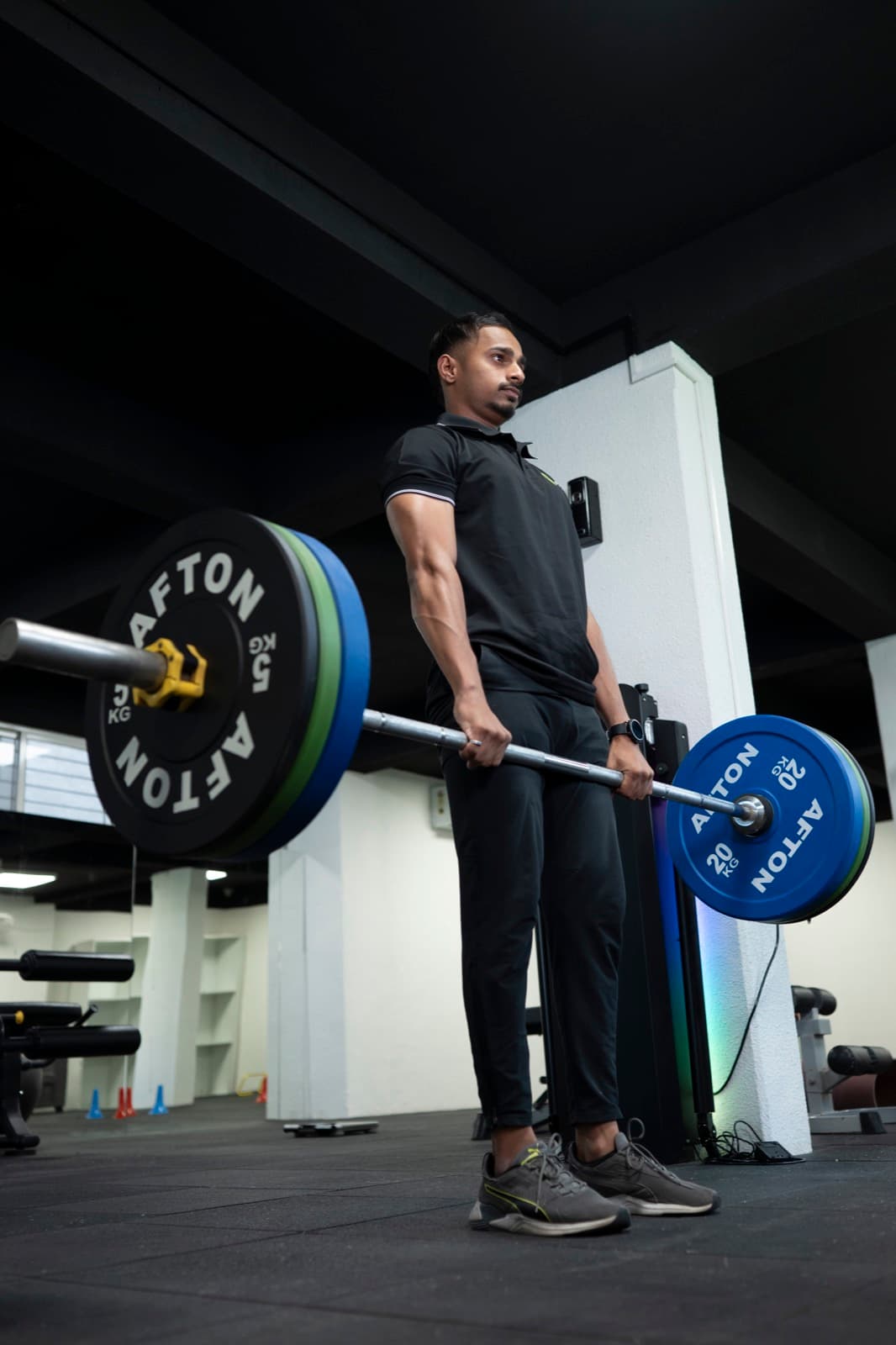
Get Your Back Moving Again — Safely, With a Coach Who’s Watching.

One coach. One client. A graded plan built around your diagnosis, coordinated with your doctor, and adjusted every week as your spine gets stronger. If you're ready to stop being afraid of your own back, we'd love to meet you.

FIT360 Personal Training Studio · Grant Rd, EON Free Zone, Kharadi, Pune 411014 · Sessions by appointment