Supervised, joint-safe strength coaching for knee arthritis at FIT360 in Kharadi, Pune
Arthritis · joint-safe · doctor-coordinated · Pune

Arthritis Exercise Programme in Pune: Joint-Safe Coaching for Knee & Joint Pain

The right movement is medicine for arthritic joints — supervised, progressive, and built around your knees, in a private Kharadi studio or at home with the equipment delivered to your door.

  • ACE- & ACSM-certified coaching
  • Doctor-coordinated
  • Rated 4.9★ on Google
  • Kharadi, Pune

If a doctor has told you that your ghutne ka dard is osteoarthritis, or you’ve been quietly living with stiff, aching knees that scream on the stairs, you’ve probably heard two opposite things. One friend swears you must “rest the joint.” Another says “no pain, no gain, push through it.” Both are wrong — and following either one usually makes an arthritic knee worse.

Here is what the science actually says, and it may surprise you: for knee and hip osteoarthritis (OA), structured exercise is not a risk to avoid. It is one of the most important treatments there is — recommended by the NHS as a core treatment for people with osteoarthritis, whatever their age or fitness level. The problem was never movement. The problem is unsupervised, wrong-load movement in a crowded gym that was never built for a painful joint.

In short: an arthritis exercise programme is a supervised, joint-friendly plan — quad and hip strengthening, gentle range-of-motion work, and low-impact cardio — that progressively loads your knees or joints to reduce pain and improve how they function day to day. At FIT360 it’s designed and run one-on-one by a certified coach, coordinated with your doctor, in a private Kharadi studio or at your home. It does not cure arthritis or regrow cartilage — no honest programme can — but it can genuinely change how much your joints hurt and how much life you get back.

01 — The fear, answered honestly

“Should I Even Exercise With Joint Pain?” — The Fear, Answered Honestly

This is the question almost every new client with knee arthritis asks us, usually with real fear in their voice. It makes sense. When a joint hurts, every instinct says protect it, don’t move it. For a broken bone, that’s right. For osteoarthritis, it’s the opposite.

Here’s the mechanism, because understanding it changes everything. Your cartilage and joints have almost no direct blood supply — they’re fed and lubricated by movement itself. When you stop moving an arthritic knee, the muscles around it (especially the quadriceps on the front of your thigh) weaken. Weaker muscles mean the joint absorbs more shock and grinds more, so it hurts more, so you move even less. That downward spiral — pain leading to rest leading to weakness leading to more pain — is what actually steals people’s mobility, not the arthritis alone.

Strengthening the muscles around the joint breaks that spiral. Strong quads act like a shock absorber and a natural brace for the knee, so the joint carries less load with every step. This isn’t wishful thinking — it’s one of the most consistent findings in exercise medicine. A large Cochrane review of knee osteoarthritis found that land-based exercise reduces knee pain and improves physical function, with the benefit lasting for months after the programme. And the world’s leading joint-care bodies agree: the 2019 OARSI international guidelines strongly recommend land-based exercise and weight management as core, first-line, non-surgical care for knee and hip OA — before you ever get to injections or surgery.

So no, you don’t need to fear movement. You need the right movement, loaded correctly, watched by someone who knows exactly when to push and when to back off. That’s the whole point of doing this with a coach instead of alone.
The mechanism
Strong quads act like a shock absorber and a natural brace for the knee.
So the joint carries less load with every step — which is why strengthening around the joint breaks the pain-rest-weakness spiral.
02 — The honest comparison

Supervised Joint-Safe Coaching vs a Gym vs Rest & Painkillers vs a Random App

When you have arthritic knees and go looking for help, you really face four choices. They are not remotely the same thing, and picking wrong can genuinely set your joints back.

Load matched to your joint
FIT360 programme
Yes — progressive, watched every rep
Regular gym
Generic machines, no adjustment
Rest & painkillers
No loading at all
Generic fitness app
One-size-fits-all template
Knows it's OA vs RA vs post-surgery
FIT360 programme
Yes — assessed & doctor-coordinated
Regular gym
No
Rest & painkillers
N/A
Generic fitness app
No
Someone catches bad, joint-stressing form
FIT360 programme
Yes — one coach, on you the whole hour
Regular gym
Rarely; floor is shared
Rest & painkillers
N/A
Generic fitness app
No — you can't see yourself
Reduces pain long-term
FIT360 programme
Goal of the programme
Regular gym
Only if perfectly guided
Rest & painkillers
Masks pain, joint keeps weakening
Generic fitness app
Unpredictable
Builds the muscle that protects the joint
FIT360 programme
Yes — targeted quad/hip strengthening
Regular gym
Possible but unguided
Rest & painkillers
No — muscle wastes with rest
Generic fitness app
Maybe
Adjusts when a joint flares up
FIT360 programme
Yes — plan changes that day
Regular gym
No
Rest & painkillers
N/A
Generic fitness app
No
Nutrition & weight support (huge for knees)
FIT360 programme
Included, one team
Regular gym
Separate cost
Rest & painkillers
None
Generic fitness app
Generic

Painkillers have their place — your doctor decides that — but they treat the signal, not the cause. Rest alone lets the protective muscle waste away. A gym gives you equipment and no judgement about which loads are safe for an arthritic knee. An app can’t see your knee cave inward on a squat. Only supervised, progressive coaching does the one thing that actually helps the joint long-term: build strength around it, safely, and adjust the moment something isn’t right.

03 — How it’s built

How Your Arthritis Programme Actually Works at FIT360

“Joint-safe” isn’t a slogan here — it’s a method. Here’s what your programme is built from.

01

It starts with an assessment, not a workout

Before a single exercise, we understand your joints: which ones, how they behave, your X-ray or doctor’s notes if you have them, what movements trigger pain, and your real goal — is it climbing stairs without wincing, playing with grandchildren, or avoiding surgery? Nothing is prescribed until we know your body.
02

Joint-friendly, progressive loading — not “no pain, no gain”

Your programme is built on the exercises the evidence supports for arthritis: quadriceps and hip strengthening to brace and offload the knee, range-of-motion (ROM) work to keep the joint mobile, and low-impact aerobic training — think cycling, controlled step work, elliptical — that trains your heart and legs without pounding the joint. We start light and add load gradually, because a joint adapts to stress it’s given time to handle.

On pain, we’re precise, not vague. A mild, settling discomfort during and shortly after a session is normal and fine — that’s the joint working. But sharp pain, pain that gets worse as you go, or ache that lingers more than 24 hours is a signal that the load was too much, and we adjust it down. That’s a rule we coach to, every session. It’s the opposite of the gym-bro “push through it” mindset, which is genuinely dangerous for an arthritic joint.

03

The optimised hour, and a coach who catches bad form

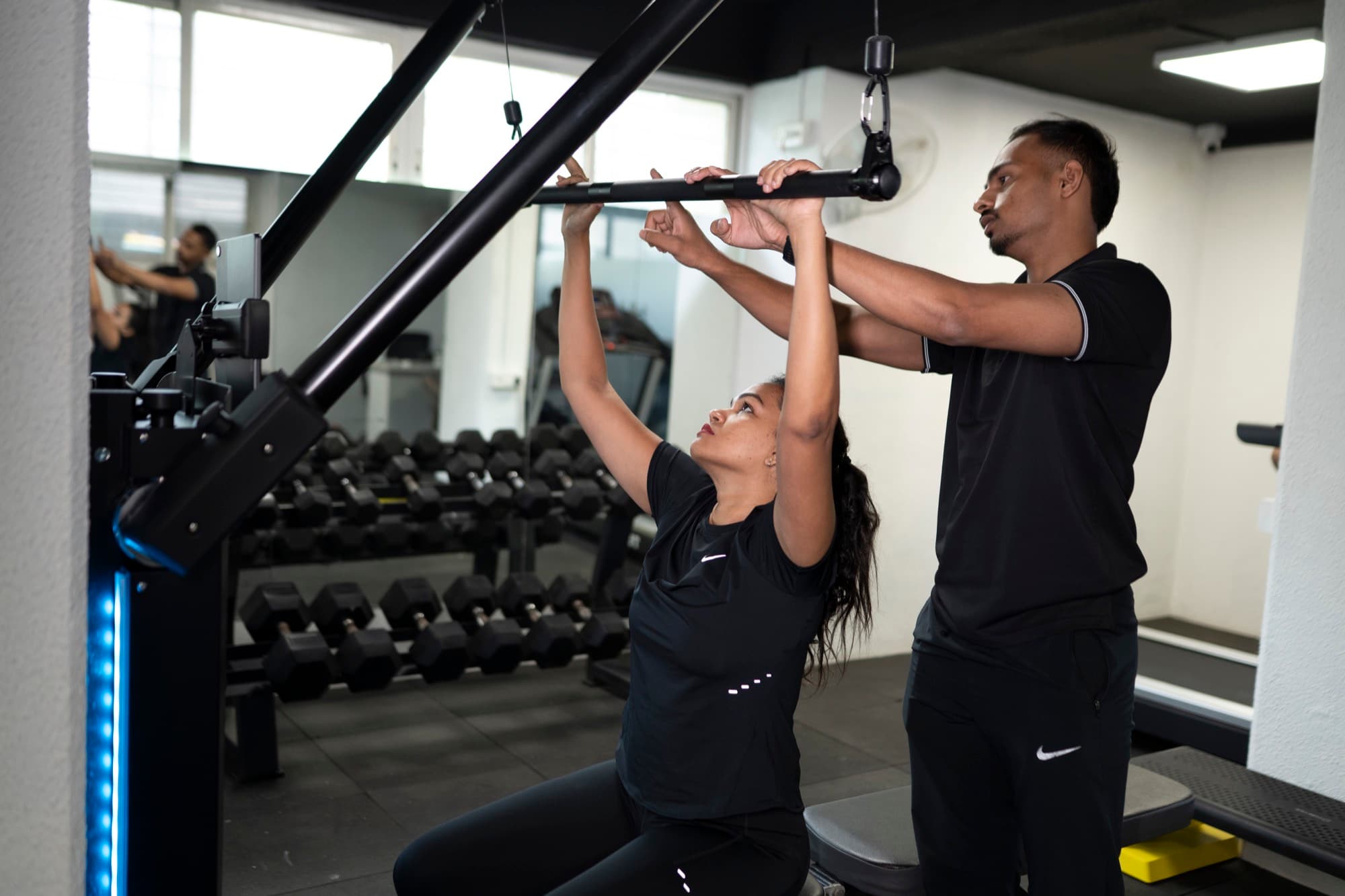
Your slot is yours. No waiting for a machine, no crowd — the whole hour is spent working, with one coach watching every rep. For arthritis this matters more than for almost anyone: a knee that caves inward, a squat that goes too deep, a load that’s a little too heavy today — these are exactly the mistakes that flare a joint, and they’re invisible when you train alone or in a busy gym. One-on-one supervision is your safety net.
04

A plan that adapts — because joints have good days and bad days

This is our sharpest difference. Your programme is not a fixed PDF you’re handed on day one. It’s continuously adapted to how your joints are right now — how you slept, whether a knee is flaring, how your last session felt, the weather, your stress. Arthritis doesn’t move in a straight line, and neither does good coaching. On a stiff, sore day we dial load down and lean into mobility; on a strong day we progress. Your plan tracks your body instead of ignoring it.
04 — The gentle progression

Progressive Loading, One Step at a Time — Where a Well-Run Programme Takes You

We start light and add load gradually, because a joint adapts to stress it’s given time to handle. For many people with knee OA, that’s the difference between dreading the stairs and forgetting they were ever a problem.

01
02
03
04
05
Start light → add load as the joint earns it
  1. Milestone 01

    climbing stairs without wincing

  2. Milestone 02

    playing with grandchildren

  3. Milestone 03

    how far and how comfortably you can walk, climb, and move

  4. Milestone 04

    give conservative, guideline-first care a genuine, well-run shot

  5. Milestone 05

    forgetting they were ever a problem

Not a cure and not a fixed timeline — exercise manages arthritis brilliantly; it doesn’t erase it.

05 — An honest, important distinction

Osteoarthritis vs Rheumatoid Arthritis — An Honest, Important Distinction

“Arthritis” (what many call gathiya) is not one condition, and this distinction genuinely matters for how — and whether — you train right now.

Osteoarthritis (OA) — where we work

Osteoarthritis (OA) is the “wear-and-cushioning” kind — the cartilage that pads a joint thins over years, most often in knees, hips, and hands. It’s degenerative and mechanical. This is the type where progressive strengthening and low-impact exercise are first-line, guideline-recommended care, and where a programme like ours does its best work.

Rheumatoid arthritis (RA) — needs a rheumatologist

Rheumatoid arthritis (RA) is completely different — it’s an autoimmune disease, where your own immune system attacks the joints, and it needs a rheumatologist and medication (DMARDs) to control the disease itself. Exercise can absolutely support someone with RA — but as a carefully managed, flare-aware addition to their medical treatment, never as a replacement for it. We would never imply training alone manages RA. During an active RA flare, the approach changes entirely, and we take our lead from your rheumatologist.

So our honest position: for knee and hip OA, we can build you a strong, guideline-based programme with confidence. For RA — or if you’re recently post joint surgery or replacement, or in an acute flare of any kind — we require your doctor’s clearance first and we coordinate closely with them. This isn’t red tape. It’s the difference between safe and reckless.

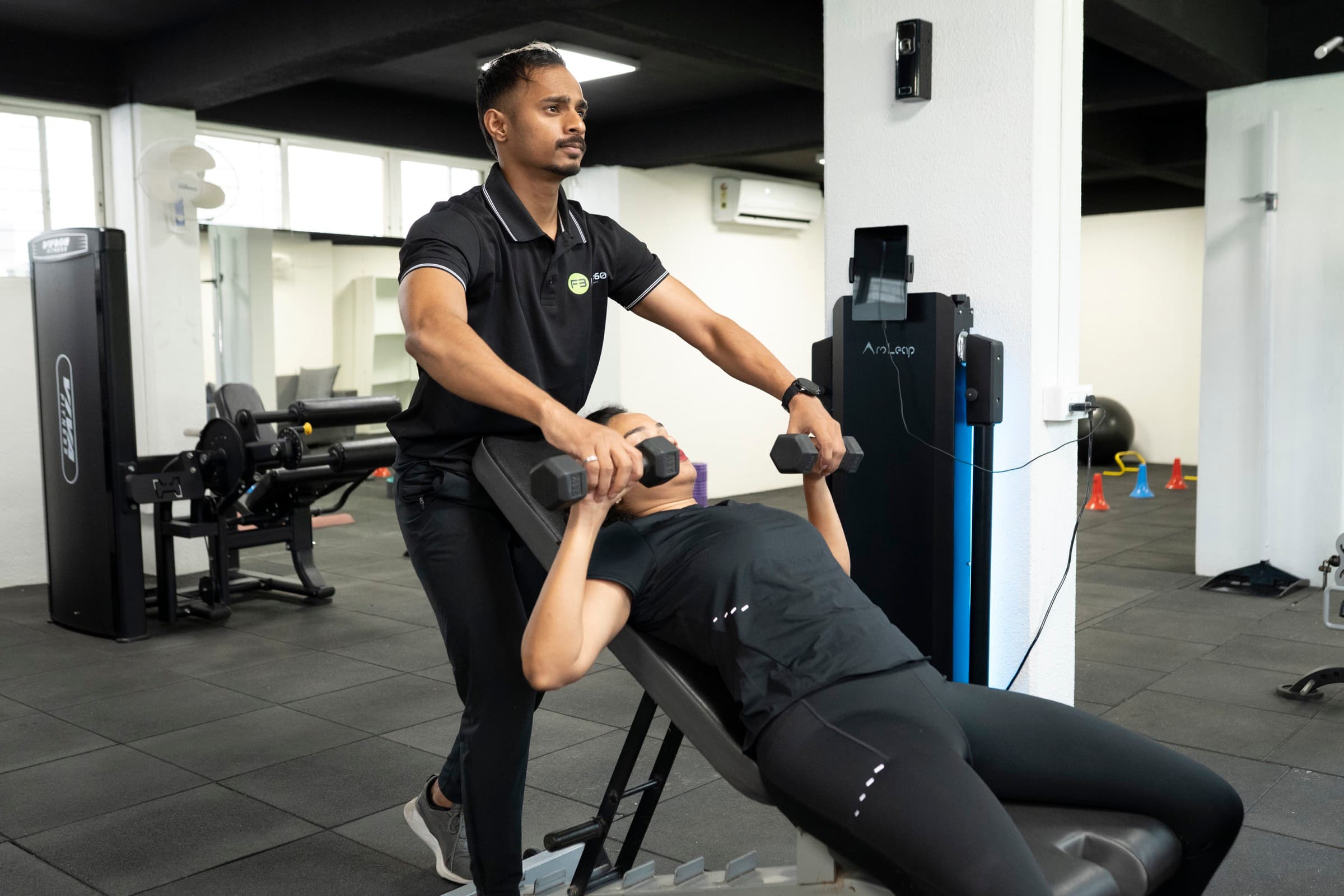
A supervised one-on-one coaching session in progress at FIT360, Kharadi
Supervised · progressive · doctor-coordinated

Land-based exercise reduces knee pain and improves function — watched by someone who knows when to push and when to back off.

06 — Nutrition included

Nutrition and Weight — the Quiet Amplifier

Clinical dietitian, in the programme

There’s a simple piece of joint mechanics worth knowing: every extra kilo you carry multiplies through your knees with each step. That’s why the international guidelines pair exercise with weight management as core care for knee and hip OA — the two together relieve more pain than either alone. Losing even a modest amount of weight can meaningfully reduce the load your arthritic joints absorb all day.

This is why nutrition isn’t sold separately here — it’s built into your programme, led by Ekta Kinger, our consulting clinical dietitian (BSc in Exercise Science, MSc in progress, a Certified Diabetes Educator with 14 years of experience). Her plans are built around real, home-cooked Indian food and your actual routine — not a printout of “boiled chicken and broccoli.” For joint clients, weight management is framed honestly: it’s a powerful adjunct that amplifies relief, not a magic promise. If you want the deeper version of this, our weight-loss coaching in Pune works hand-in-hand with your joint programme.

07 — Who it’s for

Who This Arthritis Programme Is For

We built this for the people a normal gym quietly fails and a pharmacy can’t help:

Adults in their 40s, 50s and beyond feeling the first real stiffness and knee pain, who want to stay mobile and independent for the decades ahead.

Desk workers and IT professionals at EON, WTC and around Kharadi — long sitting hours quietly weaken the muscles that protect your knees, and arthritis shows up younger than most expect.

Anyone told to “just rest” who has watched their strength and confidence fade with each month of avoiding movement.

People recovering from a knee injury (with clearance) who need to rebuild strength safely without re-aggravating the joint.

Those facing — or hoping to delay or avoid — a knee replacement , who want to give conservative, guideline-first care a genuine, well-run shot before surgery.

08 — Meet your coach

Meet Your Coach — and the Medical Bridge Behind It

FIT360 was built by three founders — Debargha, Avinash, and Lucky — who were tired of gyms that hand you equipment and a static plan and leave you to it. For someone with arthritic joints, that model isn’t just frustrating, it’s unsafe.

Lucky Parkhi — Personal Trainer & Exercise Programmer. An ACE- and ACSM-certified personal trainer (dual certification, not a weekend course), he designs your programme, runs your assessments, and progresses your loading joint-by-joint as your body responds. When it comes to knowing which loads a knee can safely take today, supervision like this is the whole difference.

Ekta Kinger — Clinical Dietitian & Nutritionist. BSc in Exercise Science with an MSc in progress, a Certified Diabetes Educator with 14 years of experience. She builds the nutrition and weight side of your programme — the quiet amplifier for joint relief.

Crucially, for a health condition we don’t work in isolation. Your doctor or rheumatologist guides the medical side; we design and deliver the exercise, in coordination with them. That bridge between medicine and movement is something a regular gym simply cannot offer — and for arthritis, it’s exactly what you need.

Lucky Parkhi, ACE- and ACSM-certified personal trainer at FIT360
Lucky Parkhi · ACE + ACSM certified
Testimonial — pending client intake

[TESTIMONIAL — from intake: a real Pune client with knee osteoarthritis who reduced pain and got back to stairs/walking, with their result and a quote.]

Clients on the programme

Rated 4.9★ on Google

Google review

As someone with a hectic work schedule, finding time and motivation to work out was always a challenge. I joined Fit360 a few months ago, and it's honestly been a game changer. The workouts are short, effective, and customized to my fitness level. Highly recommend it to all working professionals.

HA
Hussen Ali
Working professional · Kharadi
Google review

Lucky Sir has been instrumental in my progress. There's no crowd at all — it genuinely felt like my personal gym. The homely, comfortable environment made such a difference in my recovery and progress. Fit360 delivered on their commitment: they promised results, and I genuinely achieved them.

A
Ashwin
Long-term private client · Kharadi
Google review

The personal studio experience is great and extremely goal oriented. Mr Lucky is professional and makes sure that every set and rep is completed with precision. He takes it upon himself that the client receives not only physical but nutritional guidance as well.

AK
Aakanksha Kumar
Private studio client · Kharadi
09 — Honest about results

Doctor-Coordinated, and Honest About Results

We’ll always tell you the truth about what training can and can’t do, because with your joints you deserve nothing less.

What a good programme genuinely does

Reduces pain, strengthens the muscles that protect and offload your joints, improves how far and how comfortably you can walk, climb, and move, and improves your quality of life. For many people with knee OA, that’s the difference between dreading the stairs and forgetting they were ever a problem.

What it does not do — and we will never claim it does

It does not cure arthritis, reverse the condition, regrow cartilage, or heal joint damage. Anyone promising that isn’t being honest with you. Exercise manages arthritis brilliantly; it doesn’t erase it. Our job is to give you the most of what movement genuinely can do, safely.

For anyone with rheumatoid arthritis, recent joint surgery or replacement, or an acute flare, we ask for your doctor’s clearance before we begin and we stay coordinated with them throughout. If your arthritis sits alongside back or disc pain, our back pain & slip disc programme is built the same careful way.

10 — Plans & formats

Plans, Formats, and Getting Started

Testimonial — pending client intake

[TESTIMONIAL — from intake: a client who avoided or delayed surgery / returned to daily activity, with timeframe and a quote.]

One thing you’ll notice comparing options across Pune: it’s rarely clear what you’re actually paying for. Here it’s simple. One bundled monthly fee covers everything — your certified trainer, your dietitian, and your fully personalised, continuously-adapted programme. Not a membership, then a trainer fee, then a separate dietitian. One price, one team, everything included. What you pay depends only on the format you choose.

  • In-studio — the private FIT360 studio near EON Free Zone, Kharadi. The whole space, just for your slot.
  • At home — this matters especially if arthritis limits how far you can travel: we deliver the equipment to your house, enough to run your entire programme, so home training gets you the same result as the studio. See how at-home training works.
  • Online / virtual — live video-call coaching if you prefer to train from home without a visit.

On results, we won’t promise a number in a week — honest coaching doesn’t work that way, and it certainly doesn’t with joints. What we promise is a guideline-based plan matched to your body, a coach who adjusts it every session, and steady, visible progress in pain and function. Book a free consultation and we’ll tell you exactly what’s realistic for your joints.

11 — FAQ
Questions — 09

FAQs About Exercising With Arthritis

Is walking and climbing stairs good or bad for knee arthritis?

Walking is generally good — it's gentle, low-impact movement that keeps the joint mobile and the muscles active, and most people with knee OA should stay walking within comfort. Stairs are more demanding because they load the knee heavily, so they can aggravate a painful joint if your quads are weak. The answer isn't to avoid stairs forever — it's to build the leg strength that makes stairs comfortable again. That's exactly what a progressive programme does. If a specific movement causes sharp or lasting pain, that's a signal to adjust, not to push through.

Can exercise help me avoid a knee replacement?

Honestly: sometimes, and it's worth a serious try. International guidelines recommend exercise and weight management as first-line care before surgery, and many people meaningfully reduce pain and improve function enough to delay or avoid a replacement. But we can't promise it in every case — how far arthritis has progressed varies from person to person, and that's a decision you make with your surgeon. What we can promise is to give conservative, guideline-first care a genuine, well-run shot.

Is it safe to lift weights or strength-train with arthritis?

Yes — for osteoarthritis, supervised strength training is one of the most effective things you can do, because it builds the muscle that protects and offloads the joint. "Safe" is about load and form, not avoiding weights altogether. Done progressively and watched properly, resistance training reduces pain rather than causing it. Done randomly and too heavy, it can flare a joint — which is exactly why supervision matters here.

What's the difference between osteoarthritis and rheumatoid arthritis for training?

Osteoarthritis is the degenerative "wear" type, and progressive exercise is first-line care for it. Rheumatoid arthritis is an autoimmune disease that needs a rheumatologist and medication; exercise supports it but only as a carefully managed, flare-aware addition to medical treatment, never a replacement. We assess which you have and, for RA or any active flare, we require and coordinate with your doctor before starting.

Will exercise cure or reverse my arthritis?

No — and we'll never claim it will. Exercise does not cure arthritis, reverse it, or regrow cartilage. What it genuinely does is reduce pain, improve joint function, and improve your quality of life, with benefits that can last for months. It manages the condition very well; it doesn't erase it. Honest expectations are part of good, safe coaching.

Does losing weight actually help arthritic knees?

Yes, meaningfully — for knee and hip OA, every extra kilo multiplies through the joint with each step, so losing even a modest amount reduces the load your joints carry all day. That's why guidelines pair weight management with exercise as core care. It's a powerful adjunct that amplifies relief, which is why nutrition is built into your programme rather than sold separately.

Can I do the arthritis programme at home?

Yes — and it's often ideal if arthritis limits how far you can travel. We deliver the equipment to your home and run the full programme there, so you get the same result as the studio without a commute. Online video-call coaching is available too.

Do I need my doctor's approval before starting?

For straightforward knee or hip osteoarthritis, we do a thorough assessment and coordinate with your doctor as needed. For rheumatoid arthritis, a recent joint surgery or replacement, or an acute flare, we require your doctor's clearance before we begin and we stay coordinated with them throughout. It's how we keep your joints safe.

Where exactly are you, and how do sessions work?

Near EON Free Zone, Grant Road, Kharadi, Pune 411014 — minutes from EON IT Park, WTC, and Gera Commerzone. Sessions run by appointment, so you book a slot that fits your day rather than working around fixed gym hours. You can also train entirely at home. See our Kharadi personal training for more on how we work.

Give Your Joints the Right Kind of Movement.

Arthritis doesn't have to mean slowly giving up the things you love. The right, supervised programme can genuinely reduce your pain and give you back your mobility — safely, and coordinated with your doctor. If you've been afraid to move, this is the safest place to start. Book your free consultation — no pressure, just an honest conversation about your joints and what's realistic.

FIT360 Personal Training Studio · Grant Rd, EON Free Zone, Kharadi, Pune 411014 · Sessions by appointment